

THE LUMBERJACK DESIGN
Work from The Lumberjack juxtaposes the warmth of wood and the coolness of geometry. It draws on classical wood working and craftsmanship but applies them to less traditional and bolder designs. It references the work from Joaquim Tenreiro, a father of Brazilian furniture design in the 1940’s and 1950’s. Tenreiro was a forerunner in the use of rediscovered raw materials as well as the creator of a new modernistic Brazilian furniture design.

Joaquim Tenreiro Bookshelf 1950 Bossa Furniture

Donald Judd chairs – late 1970s
Donald Judd is a great source of inspiration. He is generally considered the leading international exponent of “minimalism”. His work often consists of simple forms, boxes, that are stacked and grouped. The Lumberjack has a similar aspiration for simplicity. Simplicity and geometric shapes guide the quest for aesthetic balance, Lumberjack style. Designs are counter intuitive and surprise the beholder.
MATERIAL USE

Wood from Amsterdam trees from Stadshout – Silver Maple and Elm
Another frequently used material is black steel. Wood combines beautifully with the dark, untreated and slowly corroding steel.
BUY A DESIGN OR HAVE A CUSTOM DESIGN MADE
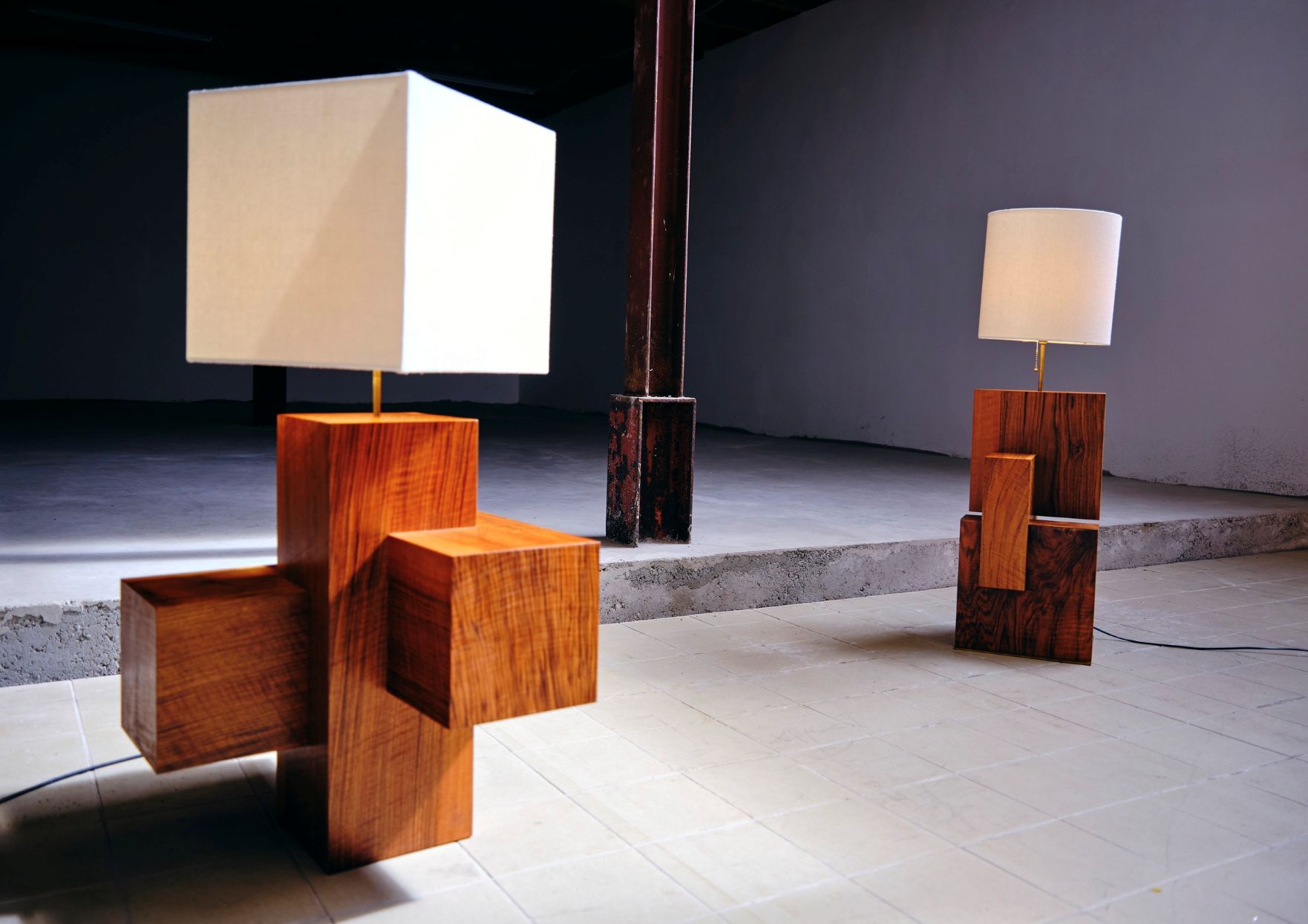
Lumberjack pieces are unique pieces. Each piece is designed and made by Arne in his studio in Amsterdam. Lamps are designed, produced and then sold. They can be reordered in different sizes and different types of wood.

Example project
PUBLICATIONS AND DESIGN FAIRS
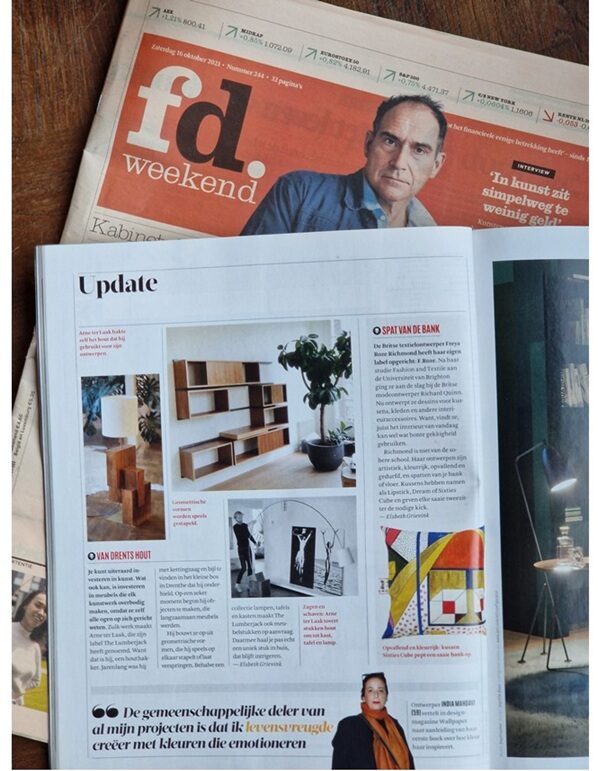
Publication in weekend edition of Financieel Dagblad
Early design picked up by the Volkskrant

Publication in Eigen Huis & Interieur

HOW IT STARTED

Arne ter Laak is The Lumberjack. The name originates from his work as a lumberjack, maintaining a little forest that he owns in the east of the Netherlands. In that forest he plants, prunes and cuts trees. Working with wood, cutting, sawing, chopping and stacking wood, inspired him. He started using the wood for making objects, art pieces, driven by a vision of coarse logs and geometric shapes. Juxtaposing the warmth of wood and the coolness of geometry. They were large objects, both indoor pieces and outdoor projects.
His father inspired Arne’s early work. His father made geometric objects from carboard and geometric designs from layered sheets of cut-out cardboard.
The art pieces made from the coarse, untreated wood were a stepping stone to furniture and interior design. He started using processed wood and plywood to make cabinets, lamps and tables and opened a studio in Amsterdam. The driving forces stayed the same, wood and geometry.